 02
02Judgment & decisions
Why tomorrow keeps losing to today
The small biases that make an immediate reward feel larger than a better future—and what choice design can do about it.
Read article →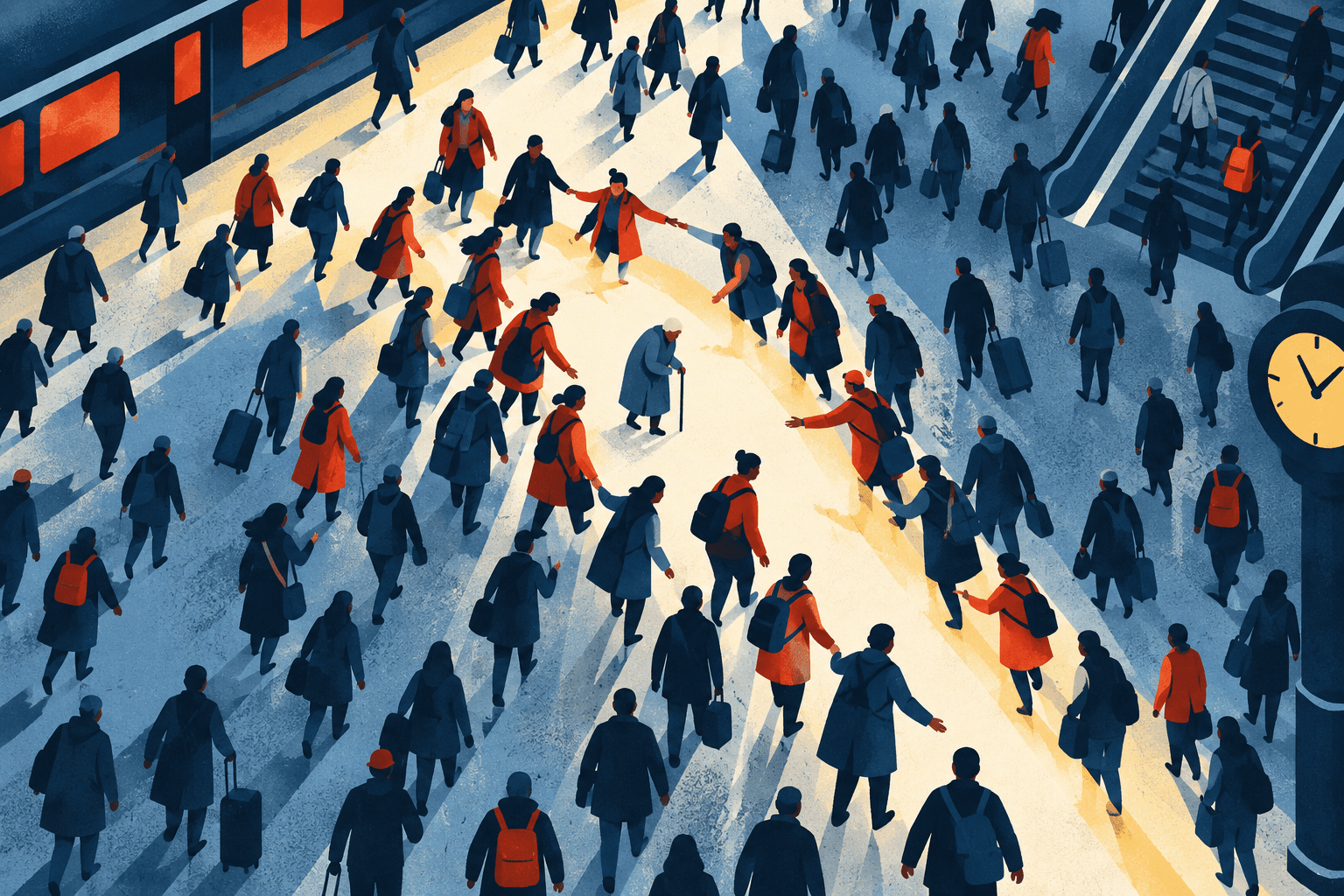
Cover story · Social psychology
Why the myth of blind panic misses the trust, information and shared identity that can organize people under pressure.
This issue
Concise reported reads on the questions moving psychology now: social life, the mind, methods and technology.
02Judgment & decisions
The small biases that make an immediate reward feel larger than a better future—and what choice design can do about it.
Read article → 03
03Relationships
Power is not only about who speaks louder: dependence, resources and social ideas shape what partners can ask, refuse and change.
Read article →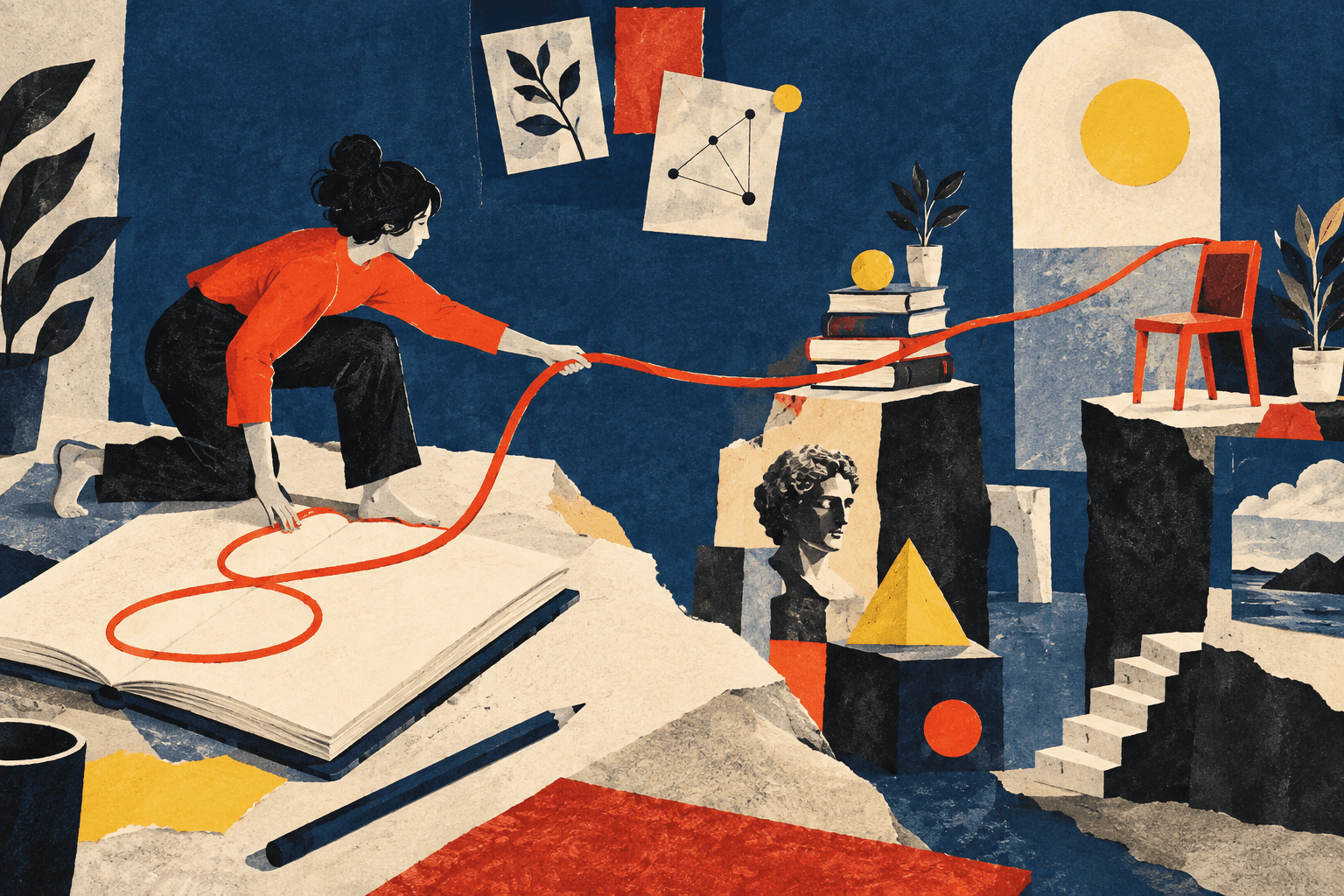 04
04Mind & cognition
Gestures, sketches and physical space are not decoration: they are tools people use to make difficult ideas manageable.
Read article → 05
05Technology & people
The difficult question is not whether a machine can answer. It is whether people can trust it, understand it and live with it over time.
Read article → 06
06Attention & perception
What happens when attention has to remain ready for a rare event—and why the answer may connect humans with other species.
Read article → 07
07Behavior change
The gap between a sincere intention and a repeated action is where behavior-change research becomes most useful.
Read article →The living archive
Every story starts from a scholarly review and places it in a question that matters beyond the classroom. See the archive →













How this edition is built
Each cover story begins with an Annual Reviews article: a reasoned snapshot of a field, its agreements, disagreements and open questions.
We do not replace the source paper. We open it up: select the most interesting question, explain what is at stake and link to the original for readers who want to go further.
Visit Annual Review of Psychology ↗Keep exploring
Each article ends with concepts and an optional short practice for readers who want to test their reading. For methods, citations and every nuance, the original review remains the starting point.